
The sheer scale of ProWein Düsseldorf 2026 is difficult to ignore, especially for a first-time visitor. Even though this year’s edition has been widely described as more compact than in previous years, the numbers remain impressive: more than 3,400 exhibitors representing every established, emerging and up-and-coming wine region in the world, alongside tens of thousands of trade professionals moving purposefully through the exhibition halls. The constant mix of languages, cultures and markets offers a vivid picture of what international wine trade really looks like. From Northern Europe to the United States, Latin America and Asia, the global wine business comes together in Germany, and for these three days in March, Düsseldorf once again became one of the industry’s most important meeting points.
Particularly in the halls dedicated to the major wine-producing countries of the Old World, visitors follow carefully planned schedules. Most buyers have arranged appointments weeks in advance and move directly from one meeting to the next. The exhibition runs with remarkable efficiency, reflecting thorough preparation on both sides of the table. Equally important is the fact that ProWein remains a strictly trade-only event. There are no casual visitors wandering through the halls -everyone present is professionally involved in the wine business.
The geography of the exhibition reinforces this impression. German exhibitors enjoy a steady flow of visitors, reflecting the country’s continuing role as one of Europe’s key wine markets. The VDP (Verband Deutscher Prädikatsweingüter) stands out both in terms of visibility and overall visitor experience. France, Italy and Spain are equally busy, with constant meetings, presentations and tastings throughout the day.
Sparkling wines continue to command exceptional attention. Masterclasses dedicated to Champagne and sparkling wines regularly reach full capacity, attracting professionals eager to taste wines that are rarely available side by side under the same roof. Even for experienced wine professionals, such opportunities remain relatively rare.
Italy’s presence is visibly smaller than in previous years. Several exhibitors estimated that roughly half as many Italian producers participated compared to last year, a difference that can be felt throughout the Italian halls. Nevertheless, those who are present generate considerable energy. Their stands remain crowded, discussions are lively and presentations draw continuous audiences -exactly the atmosphere one expects whenever Italians gather around wine.
The reduced number of exhibitors has naturally become a topic of conversation among industry professionals, yet Italy’s influence remains unmistakable. Guided tours led by Greece’s own Georgia Panagopoulou (Wine Gini) are fully booked, while the Italian masterclasses consistently sell out, complete with waiting lists. Italy continues to produce -and sell-wine on a remarkable scale, and that commercial strength remains clearly visible.
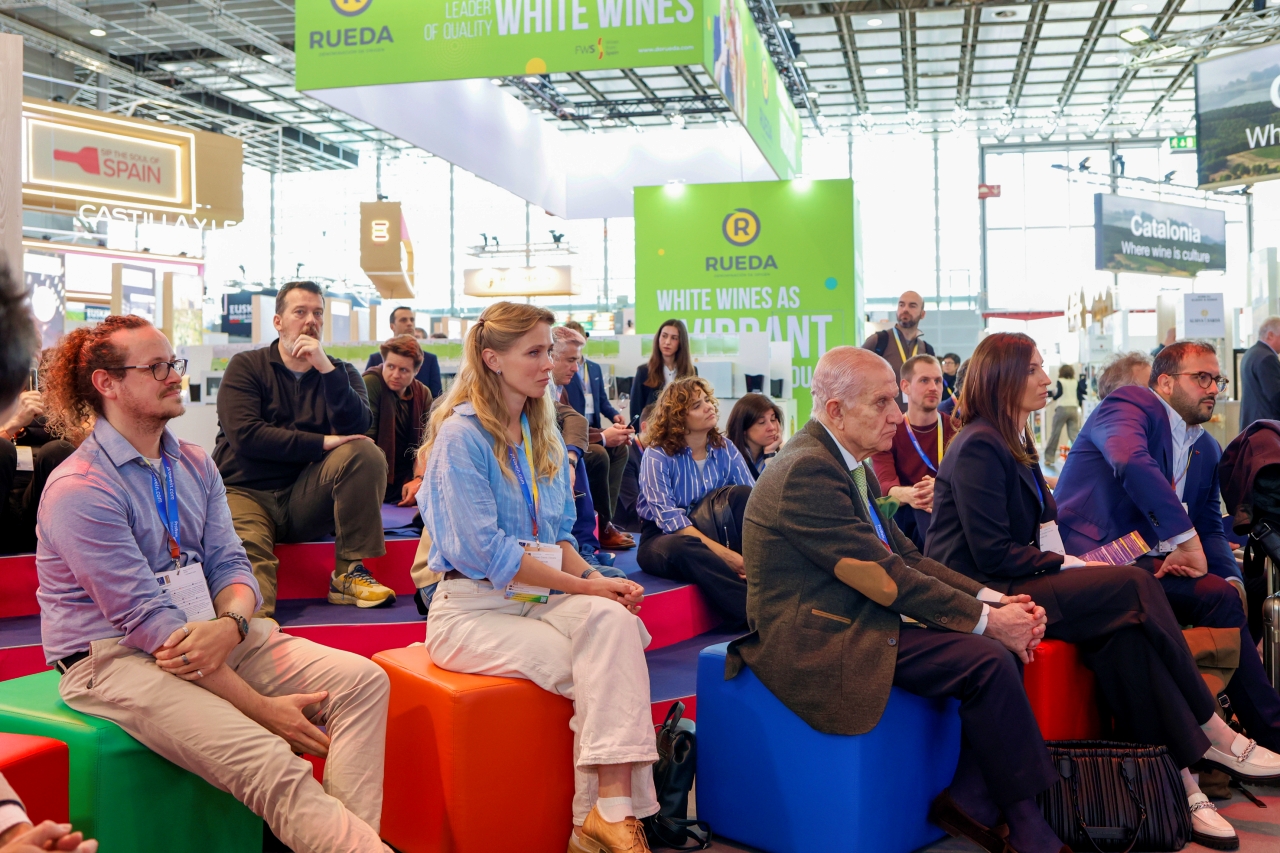
Introduced this year as a central knowledge hub, the Agora hosted more than twelve hours of programming featuring dozens of speakers from across the wine industry. Discussions explored emerging markets, changing consumer behaviour, younger generations, technological innovation and new product categories, focusing on issues directly influencing commercial decision-making.
One particularly noteworthy aspect was the way sensitive topics such as alcohol and health were addressed. Rather than polarised discussions, visitors witnessed thoughtful and well-moderated debates, where speakers defended differing viewpoints through evidence and professional argument without confrontation or ideological division.
Consumer behaviour naturally remains at the centre of almost every discussion. Declining wine consumption in traditional markets, changing drinking habits among younger consumers and increasing price sensitivity appear repeatedly throughout the programme. These conversations are directly connected to what buyers are requesting at exhibitors’ stands, from alternative packaging formats to the growing popularity of ready-to-drink beverages.
At the same time, ProWein is clearly positioning itself as more than a trade fair. Through market reports, research presentations and industry data, it increasingly functions as a decision-making platform where information is transformed into practical business intelligence. Every element of the programme is designed specifically for wine professionals, reinforcing the exhibition’s role as one of the industry’s leading knowledge-sharing events.
Meanwhile, categories that until recently occupied only a marginal place within the exhibition have become firmly established. ProWein Zero now occupies a substantial dedicated area that attracts a constant flow of visitors searching for specific commercial solutions. Interest begins with product presentation but quickly moves to tasting and technical discussions about production methods. Even visitors who remain unconvinced by the No&Low-alcohol category can find remarkably sophisticated products. Their growing market share is no longer simply reflected in market reports -it is immediately visible on the exhibition floor itself.
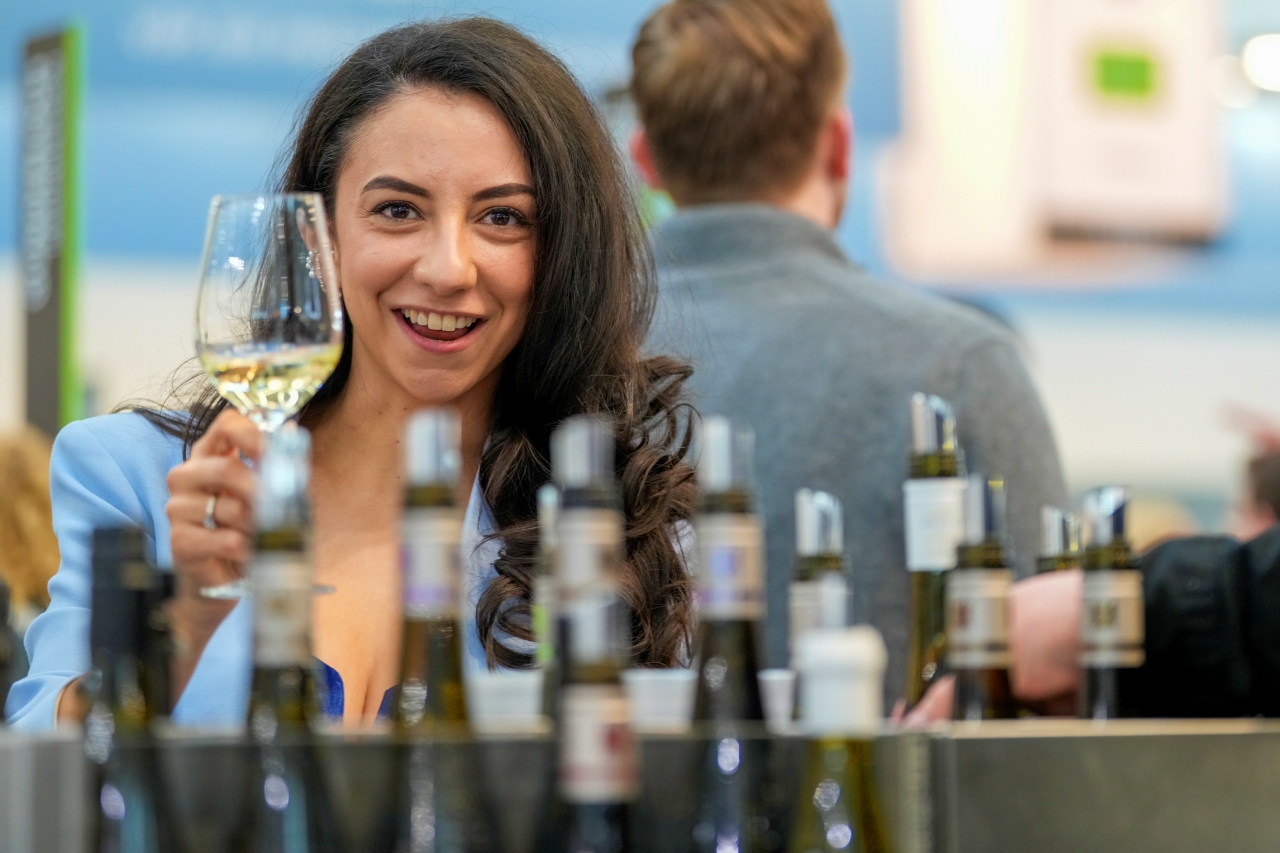
A similar level of activity can be found at “ProSpirits”, which this year expanded across two entire exhibition halls, bringing together around 500 exhibitors from 50 countries.
Spirits are no longer presented as a complement to wine. They have their own audience, their own pace and, above all, their own stories. From small craft distilleries to internationally established producers, exhibitors from every corner of the world highlight the importance of raw materials, production techniques and local identity. Storytelling has become an integral part of the product itself, adding value well beyond the liquid in the glass.
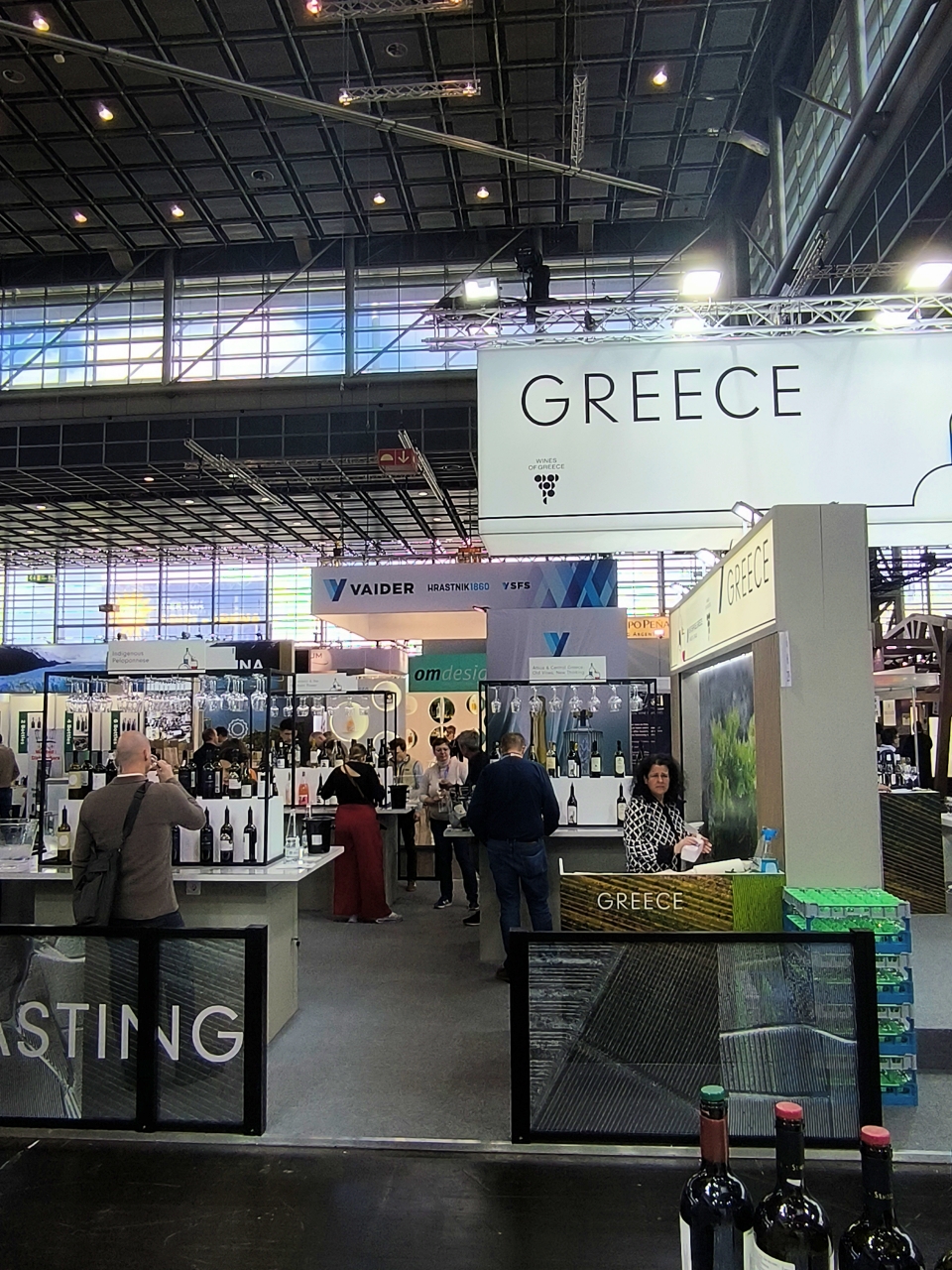
Against this backdrop, the Greek presence at this year’s ProWein was characterised by a clear sense of purpose. The wineries and distilleries exhibiting in Düsseldorf focused on targeted business meetings rather than maximising the number of contacts. Conversations were specific, commercially oriented and centred on potential collaborations. According to the first impressions shared by exhibitors, this approach appears to have delivered positive results, although, as one Greek producer put it, “everything is judged when the order finally arrives.”
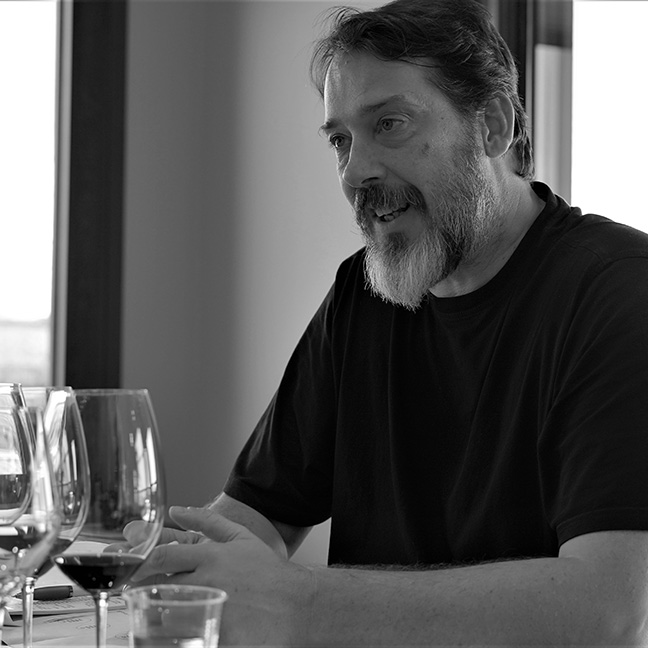
“The exhibition was roughly at last year’s level, perhaps slightly lower in terms of visitor numbers, but the change was qualitative—and for the better,” says Lambros Papadimitriou, Sales & Marketing Director at Kir-Yianni Estate. “We welcomed many visitors from the Netherlands, Belgium and Germany. That is something we need to pay attention to. The audience in Paris was different from the one that came to Düsseldorf.”
The same conclusion is echoed by other exhibitors.
“Those who come here, come with a clear purpose,” says Vassilis Papagiannakos, winemaker from Attica. “We had excellent meetings.” For many producers, the quality of business contacts now carries greater weight than the total number of visitors.
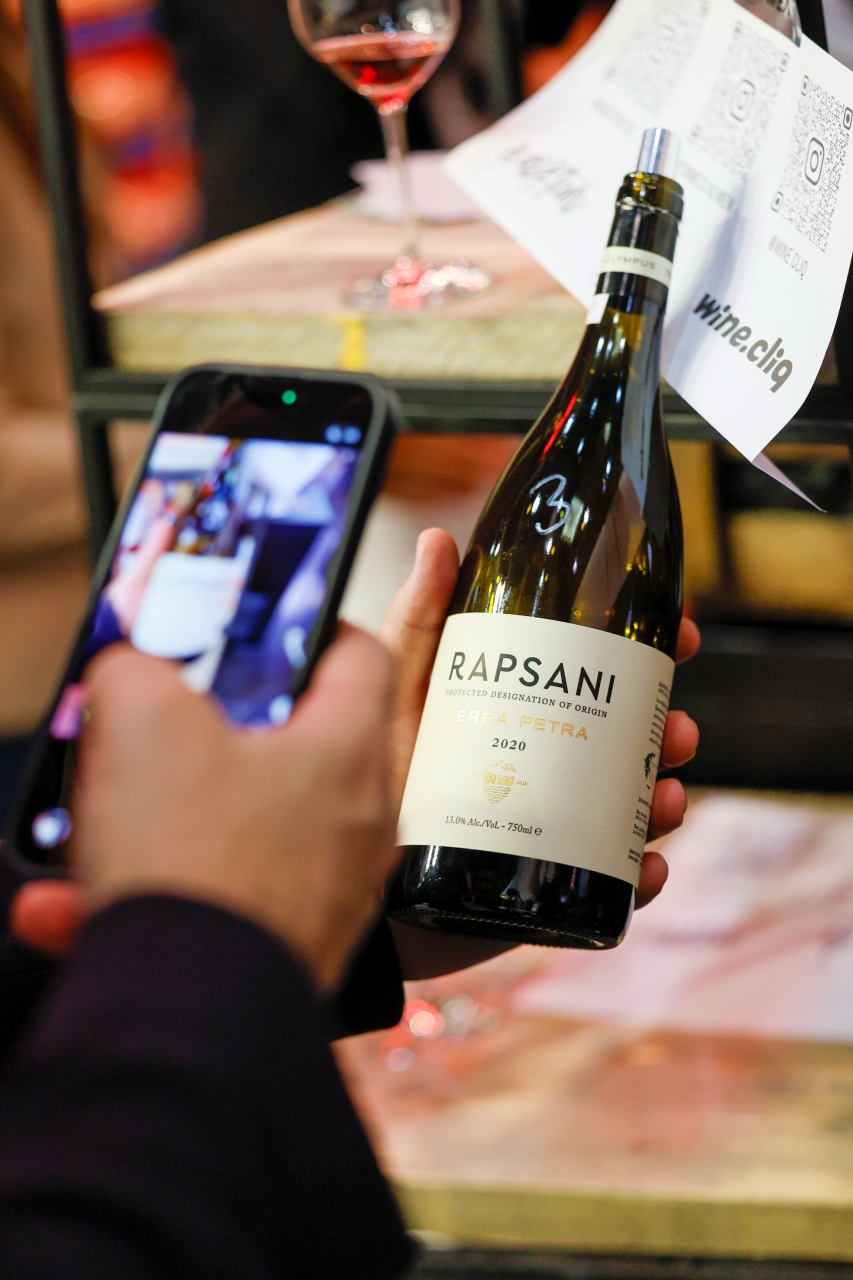
From the perspective of institutional promotion, the overall picture remains equally encouraging. “Wines of Greece” reported meaningful business meetings and sustained interest in indigenous Greek grape varieties. Germany continues to be one of Greece’s most important export destinations, while several other international markets also showed promising potential.
The educational programme further reinforced this interest. The masterclasses presented by two internationally respected Masters of Wine, Caro Maurer MW and Demetri Walters MW, both recognised for their long-standing knowledge and appreciation of Greek wine, were fully booked throughout the exhibition.
At regional level, Aris Tselepos, winemaker and President of ENOAP (Peloponnese Wine Producers Association), believes the more open layout of this year’s exhibition encouraged longer and more productive conversations.
“From the Peloponnese perspective, our tasting square worked extremely well. We welcomed a large number of professionals who stopped to taste the wines and discuss the region in greater depth.”
The role of major international trade fairs continues to evolve, particularly following the changes brought about by the pandemic and the rapid development of digital communication tools. Yet one conclusion emerged consistently from every conversation with producers and exporters in Düsseldorf: personal contact remains irreplaceable.
Digital platforms continue to play an important role in maintaining communication and facilitating business, but face-to-face meetings still represent the starting point for new partnerships. Trust is built across the tasting table, not through a screen—a reality that remains unchanged despite the industry’s digital transformation.
ProWein 2026 reflected a global wine market that is adapting rather than standing still. Consumption patterns are changing, new product categories are gaining ground, health-related discussions have become part of the industry’s agenda, and business decisions are increasingly supported by market intelligence and data. At the same time, the exhibition reaffirmed the enduring importance of direct human interaction in international wine trade.
For Greece, the message is equally clear. Interest in Greek wine remains strong, particularly among professionals already familiar with the country’s indigenous grape varieties and distinctive wine regions. More importantly, the conversations taking place this year appeared increasingly focused, commercially meaningful and strategically targeted.
In an international market facing new challenges and shifting consumer behaviour, visibility alone is no longer enough. Building relationships, communicating identity and demonstrating consistency have become the factors that ultimately determine commercial success. Judging by this year’s ProWein, Greek wine continues to strengthen its position on all three fronts.